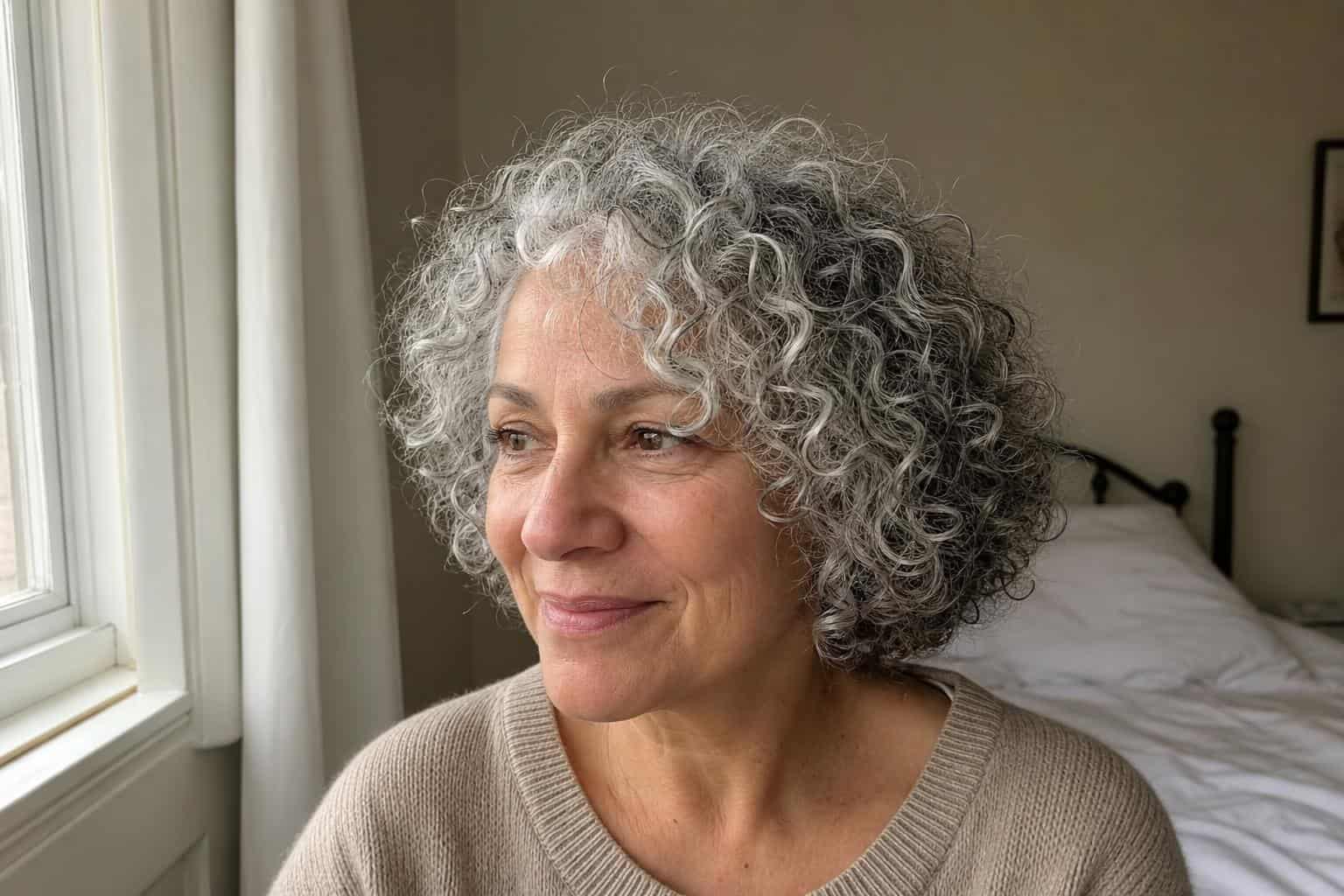
Embracing short curly hair after 50 isn’t about giving up length; it’s about gaining back volume, shape, and ease. If you’ve noticed your curls looking flatter, thinner, or harder to manage in recent years, a well-cut short style can restore the fullness and definition you thought you’d lost. The right cut works with your changing texture rather than fighting it, and you’ll spend less time wrestling with products that no longer seem to work the way they used to.
Why Short Curly Cuts Work Better After 50
How Hair Texture Changes With Age
Your curls aren’t imagining things. Hair structure genuinely changes as we age, particularly after menoponal shifts. The research on aging hair structure shows that reduced estrogen levels affect both hair shaft diameter and the scalp’s oil production. This means your individual strands get finer while simultaneously becoming coarser in texture, an odd combination that throws off the styling routines that worked for decades.
Gray hair adds another dimension to this texture shift. Silver strands typically grow with a wiry, resistant quality because they lack the melanin that once gave hair its flexibility. If you’re transitioning to natural gray or already fully silver, you’ve probably noticed your curl pattern loosening in some areas while becoming unpredictably frizzy in others. This isn’t a problem with your products or technique; it’s genuinely different hair that needs a different approach, starting with how you layer and structure your cut.
Many women also experience changes in their curl pattern itself. Type 3b curls might relax to 3a, or previously consistent waves might develop more varied patterns across the head. These shifts happen gradually but significantly alter how length sits on your head and how much weight your strands can support without losing shape.
The Volume Advantage of Shorter Lengths
Here’s the physics of curl and gravity: longer hair weighs more, and weight pulls curls straighter at the root. When your hair density decreases after 50, you have less overall mass to create volume, but that remaining hair is still being pulled down by its own length. Going shorter immediately removes that gravitational drag.
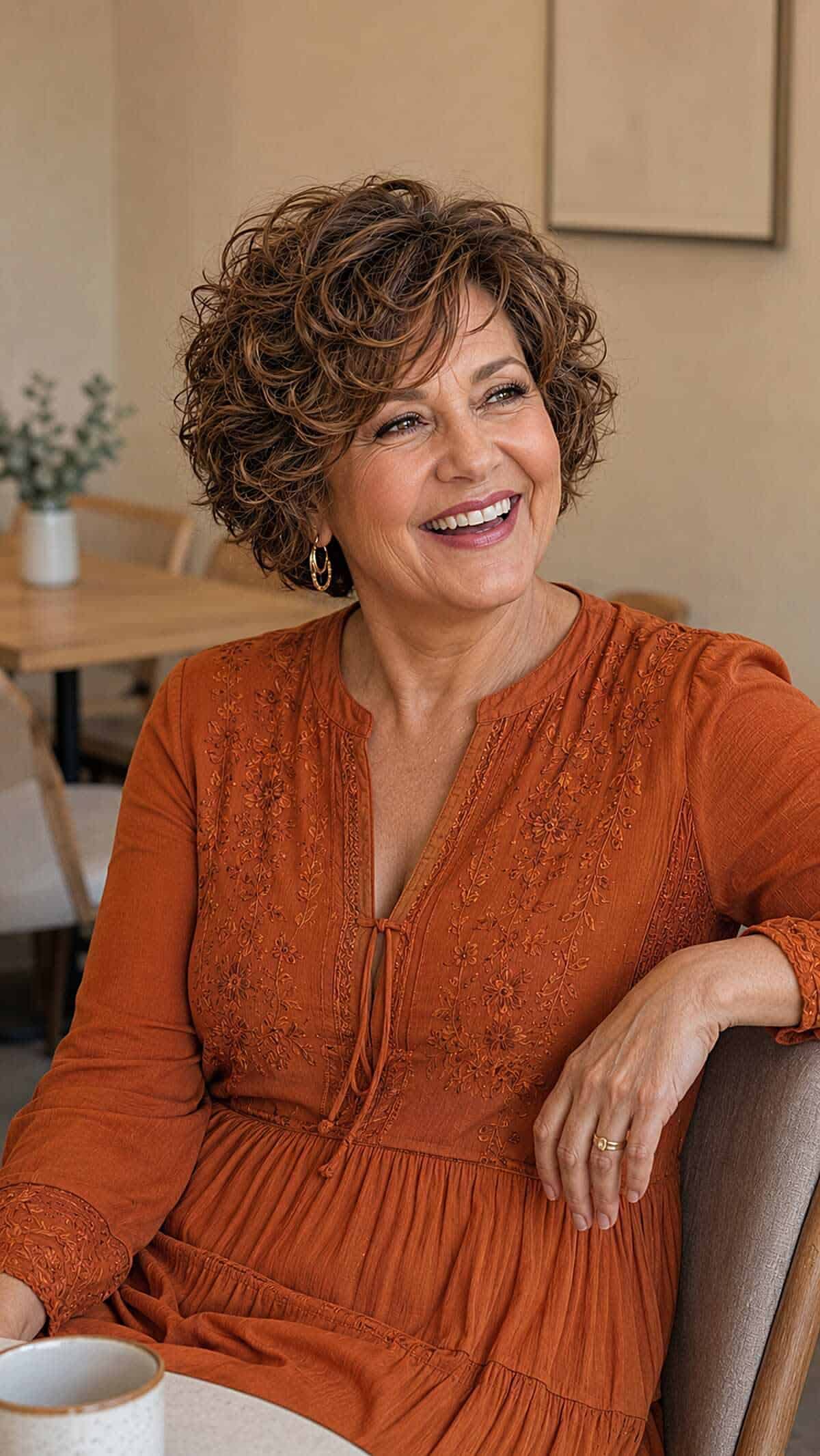
A chin-length curly bob or a textured crop allows your natural curl pattern to coil more tightly at the root instead of stretching out. The result is visible lift at the crown, something that becomes increasingly difficult to achieve with shoulder-length or longer curls on thinning hair. You’re not creating an illusion of volume; you’re allowing your actual texture to express itself without fighting physics.
Shorter lengths also make it easier to incorporate strategic layering that adds dimension. When a stylist removes weight from the right places in a short cut, each curl spring has room to form its natural shape without neighboring curls creating bulk or triangle silhouettes. The negative space between layers reads as movement and fullness rather than gaps or thinness.
Less Manipulation Means Healthier Hair
The daily reality of maintaining longer curly hair involves more detangling, more product application, more scrunching, more diffusing, and more overall handling. Each touch point is an opportunity for mechanical damage, which matters more when your hair’s structural integrity has already declined with age.
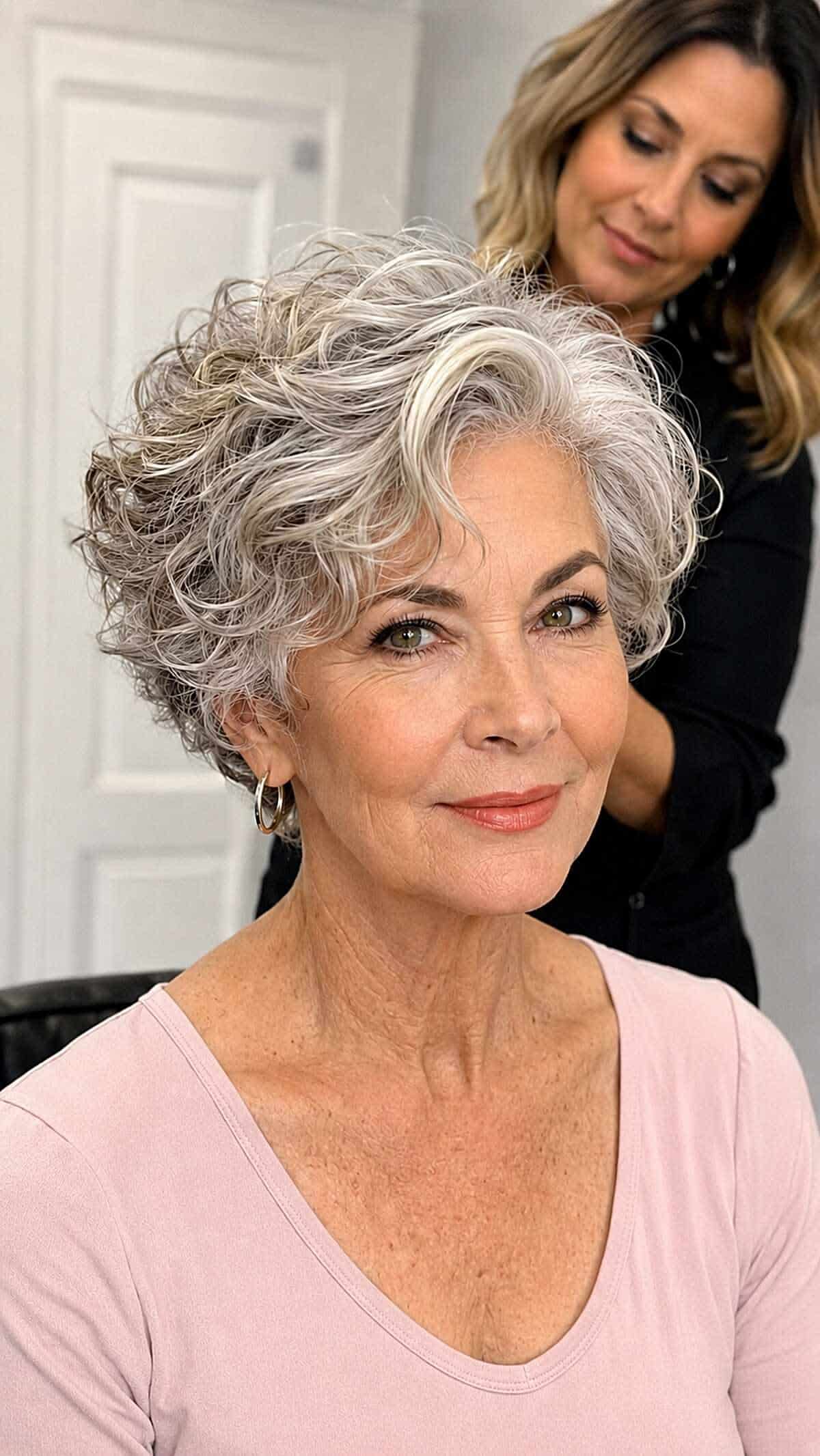
Short curly styles require a fraction of that manipulation. You’re working with less surface area, so hydrating products distribute more easily and evenly. Styling sessions shrink from 30-45 minutes to 10-15 minutes. Air-drying becomes genuinely practical rather than an all-day commitment. The cumulative reduction in handling gives your hair a chance to retain moisture, maintain elasticity, and simply experience less breakage over time.
For women dealing with scalp sensitivity or conditions like seborrheic dermatitis (more common with age), shorter hair also makes scalp care significantly easier. You can actually see and reach your scalp to apply treatments, and lighter hair doesn’t trap as much oil or product buildup against the skin.
The Most Flattering Short Curly Cuts for Mature Hair
Textured Pixie With Natural Curl
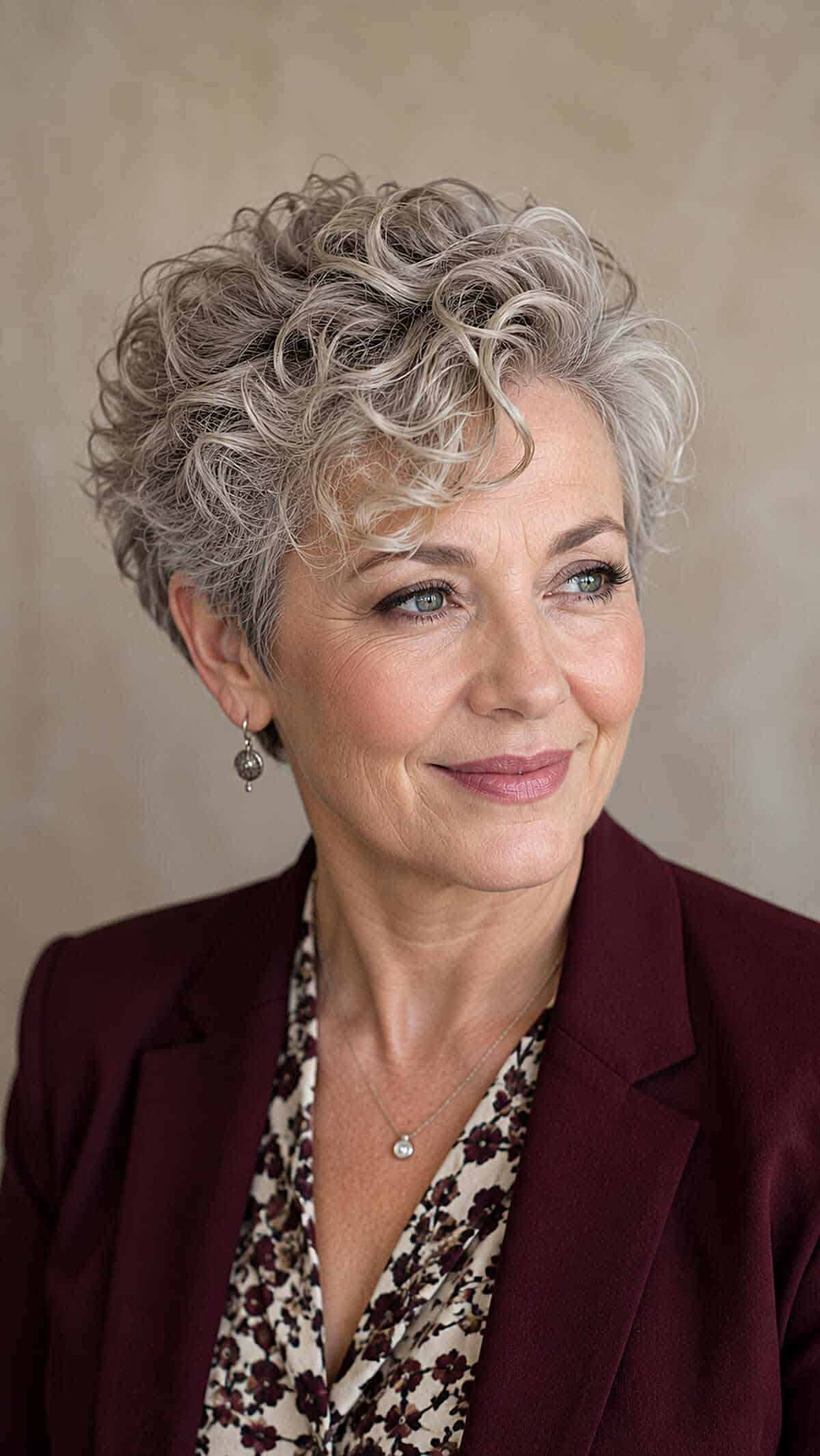
A curly pixie is nothing like the tight, helmet-like cuts you might remember from the 1980s. Modern textured pixies leave 2-4 inches of length on top with strategic layering that lets curls form individual ringlets or waves. The sides and back are tapered shorter (but not shaved unless you want that edge), creating a silhouette that lifts at the crown and narrows at the nape.
This cut works exceptionally well if your curl pattern has loosened with age or you’re dealing with significant thinning. The variation in length creates the appearance of density, and the upward movement draws the eye to your face rather than to any areas where hair might be sparse. Request longer pieces around the face to soften the overall look and provide some framing; these face-framing bits can be swept forward or tucked behind ears depending on your mood.
The key is finding a stylist who cuts short textured styles dry and curl-by-curl rather than using clippers or cutting wet. Each curl needs to be individually shaped to create the seemingly effortless tousled effect that makes this cut so flattering.
Layered Curly Bob (Chin-Length)
The chin-length bob remains one of the most universally flattering short cuts for curly hair at any age, but it’s particularly effective after 50 because it hits the sweet spot between professional polish and low-maintenance styling. The length provides enough curl formation to create substantial volume without the weight that causes flatness at the root.
Ask your stylist for internal layering rather than heavy graduation. Internal layers remove bulk from inside the haircut without creating visible stacking on the outside. This technique prevents the dreaded pyramid shape while maintaining a perimeter that looks intentional and finished. If you have thinner areas, your stylist can add more layers in fuller zones to balance the overall density.
A curly bob also offers versatility that shorter pixie cuts can’t match. You can pin it back, tuck one side behind your ear for an asymmetric look, or add a small clip for a polished effect. The length is also ideal if you’re still deciding how short you want to go; it’s dramatic enough to feel like a real change but not so short that you’ll panic if you have second thoughts.
Tapered Crop With Volume at the Crown
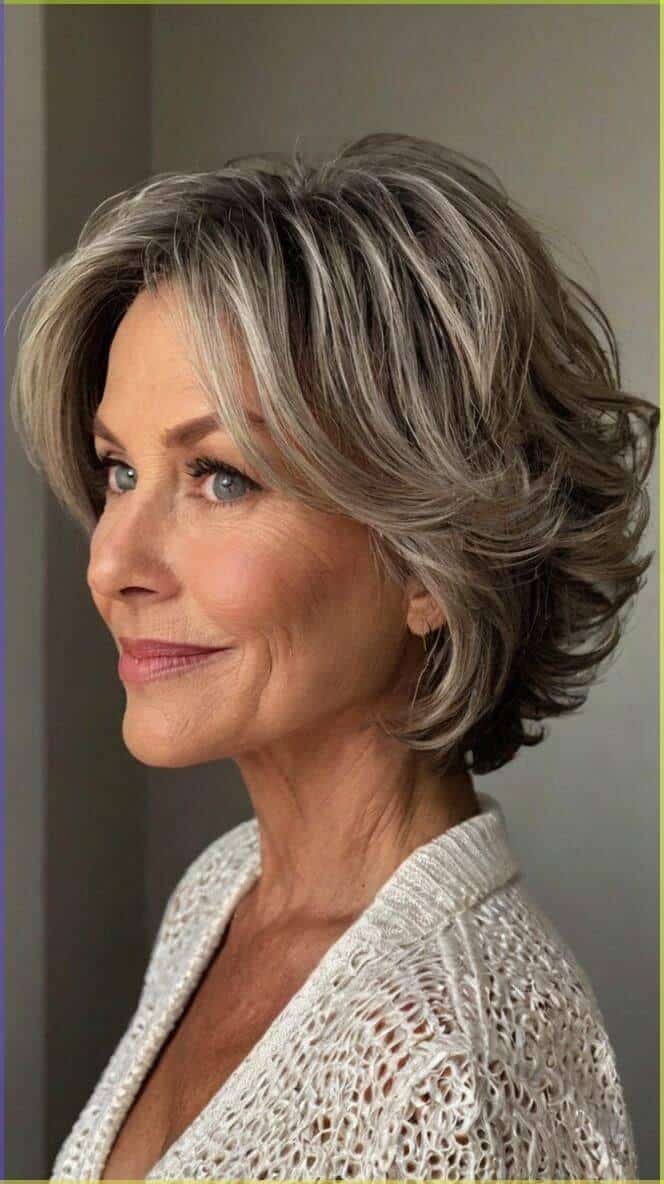
Think of this as the curly version of a classic short back-and-sides, but with much more texture and movement on top. A tapered crop keeps the perimeter close to the head (typically following the hairline at the ears and nape) while leaving 2-3 inches of length concentrated at the crown and slightly forward.
This cut is remarkably effective for women experiencing the most thinning at the temples or above the ears, common patterns as we age. By keeping those areas shorter and controlled, all attention shifts to the textured volume at the crown where you likely still have the most density. The contrast between close-cut sides and curly top reads as intentional style rather than attempting to hide thinning areas.
The tapered crop works across curl types but is especially striking on tighter patterns (3b-4a) where the crown curls can form a beautiful cloud of texture. For looser waves, ask your stylist to add more choppy layers through the top to encourage piece-y separation rather than one soft wave.
Face-Framing Shag Cut
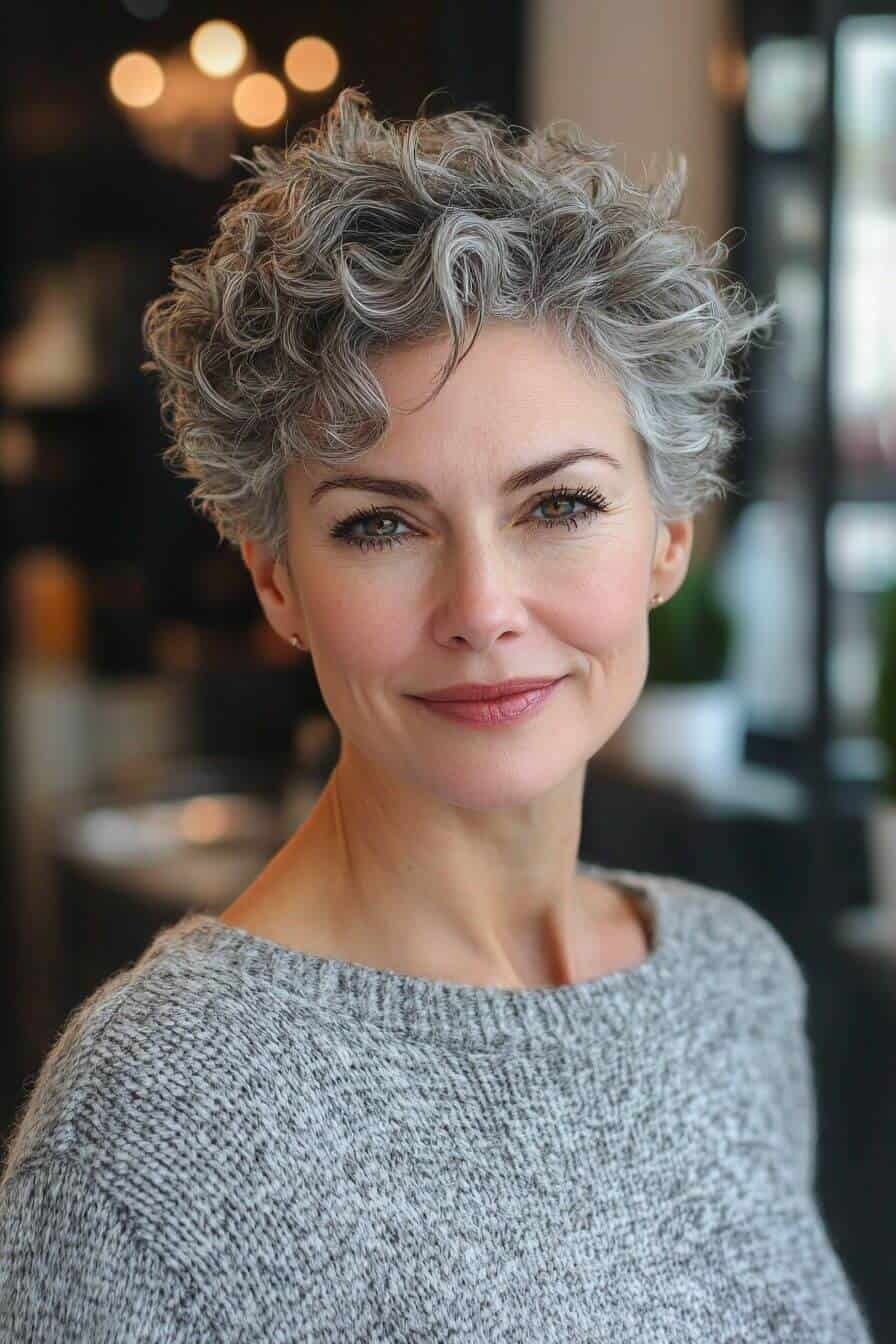
The shag has returned with a modern sensibility that suits mature faces beautifully. A curly shag in the 4-6 inch length range combines the movement of heavy layering with enough length to maintain softness and femininity. Unlike the uniform layers of 1970s shags, contemporary versions feature customized layering that responds to your specific curl pattern and face shape.
The defining feature is shorter, wispy layers around the face that create a gentle frame, moving longer as you go back toward the crown and nape. These face-framing pieces are particularly flattering because they draw attention to your eyes and cheekbones while providing coverage for areas where volume has decreased near the temples.
A shag requires a skilled curly-hair specialist because the layering has to work with your curl diameter. Too much layering on fine curls creates frizz; too little on thick curls creates bulk. The right balance produces that coveted effortless-but-polished look that reads as youthful without trying too hard.
Styling Techniques for Aging Curls
Working With Gray or Coarser Texture
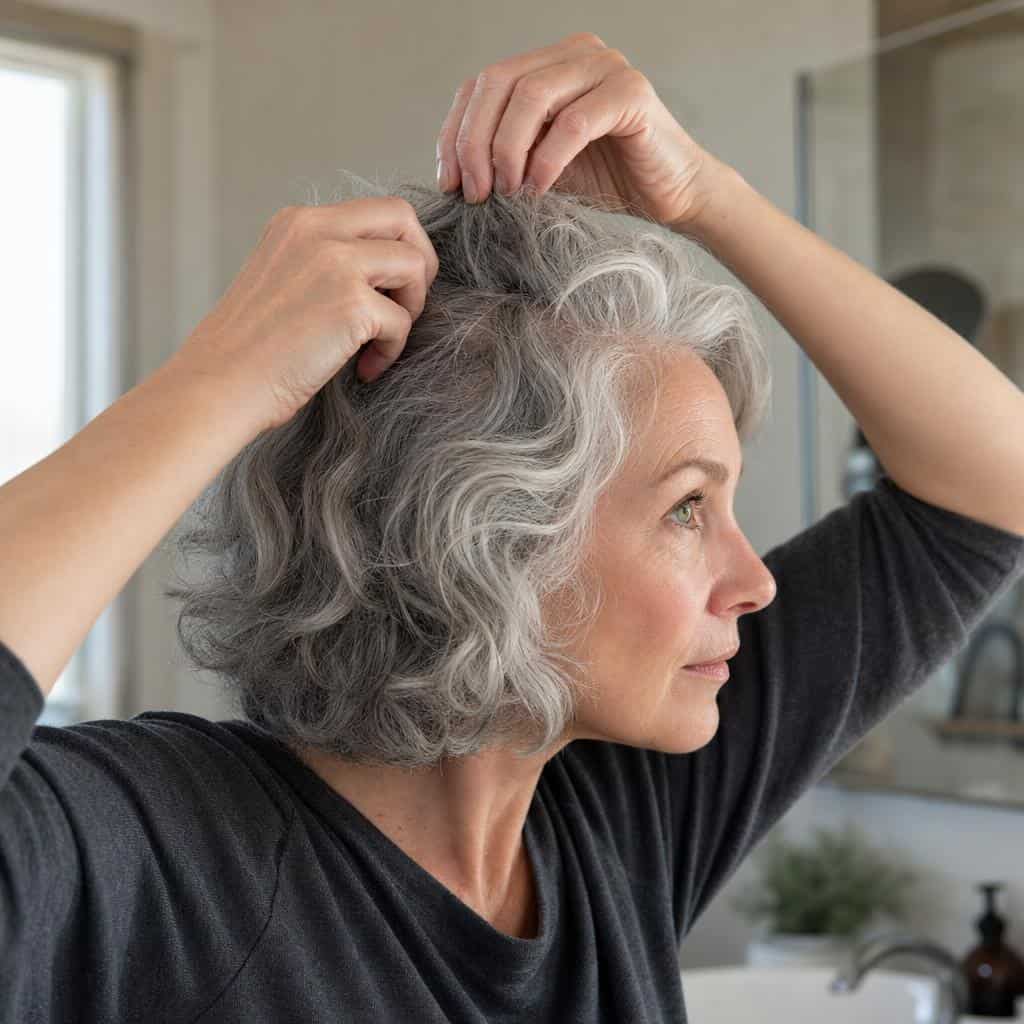
Gray curls demand more moisture than pigmented hair, full stop. The American Academy of Dermatology on aging hair notes that gray hair has a different cuticle structure that makes it more porous and prone to dryness. This is why your tried-and-true products suddenly stop working; your hair’s moisture needs have fundamentally changed.
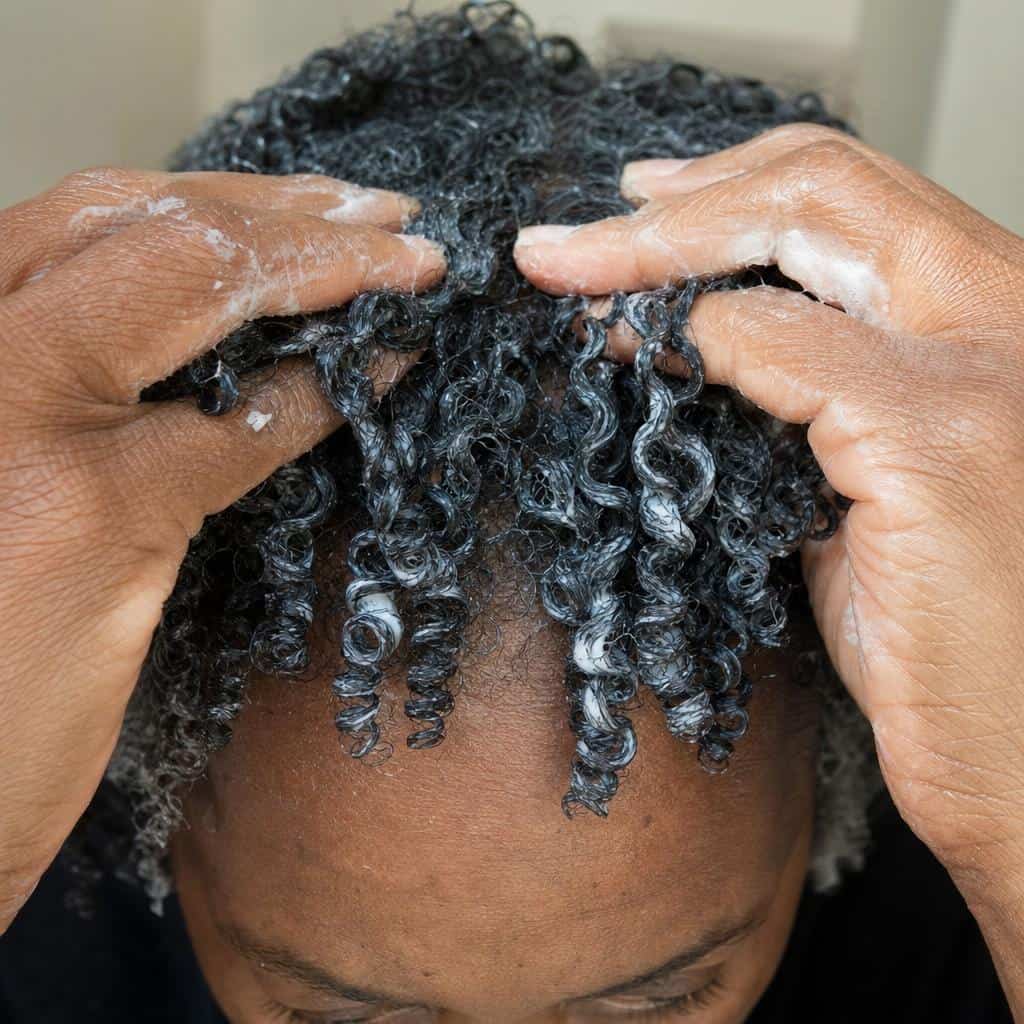
The solution is building hydration into every step. Use a moisturizing leave-in conditioner as your base layer after every wash, focusing on mid-lengths and ends but not avoiding the roots. Gray hair can handle richer products without getting greasy the way younger, oilier scalps might. Layer a curl cream over the leave-in while hair is still quite wet, then seal with a light oil if your hair tolerates it.
For stubborn frizz (common with coarse gray texture), try the “soaking wet styling” method: apply all your products when your hair is dripping wet, squeeze out excess water with a microfiber towel or t-shirt, then don’t touch it again until completely dry. The extended drying time is worth the significantly improved curl definition and reduced frizz.
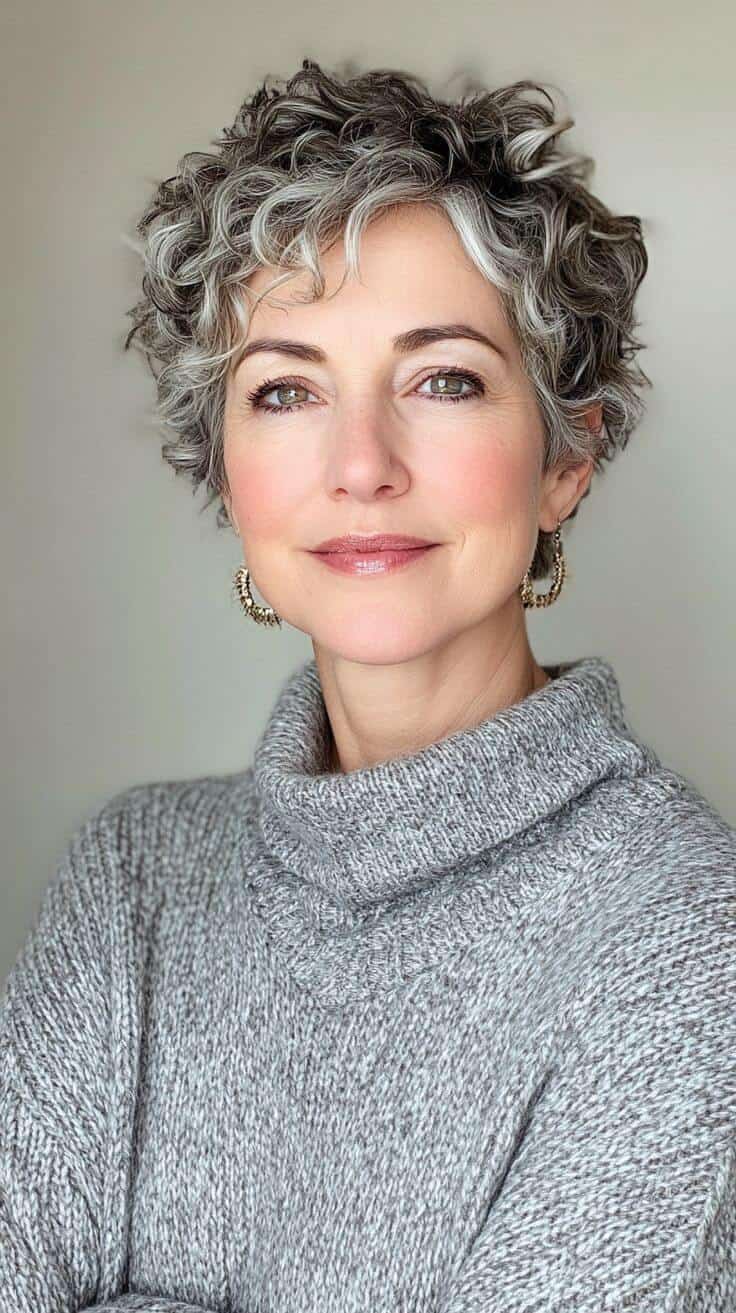
Product Layering for Thinning Hair
Thinning hair presents a paradox: it needs enough product for hold and definition but gets weighed down easily by heavy formulas. The solution is using multiple lightweight products in thin layers rather than one heavy product in a thick layer.
Start with a protein-rich volumizing mousse applied to soaking wet hair at the roots. Protein helps temporarily plump the hair shaft, and mousse provides hold without weight. Follow with a water-based curl gel (not cream) raked through mid-lengths and ends. Skip heavy butters, thick creams, or anything that lists oils in the first three ingredients if volume is your priority.
The layering order matters. Mousse first gives you root lift and structure. Gel second provides definition and hold. If you reverse this order or skip the mousse, you’ll get definition but lose volume. Some women add a root-lifting spray before the mousse for extra boost; just make sure it’s designed for curly hair to avoid dryness.
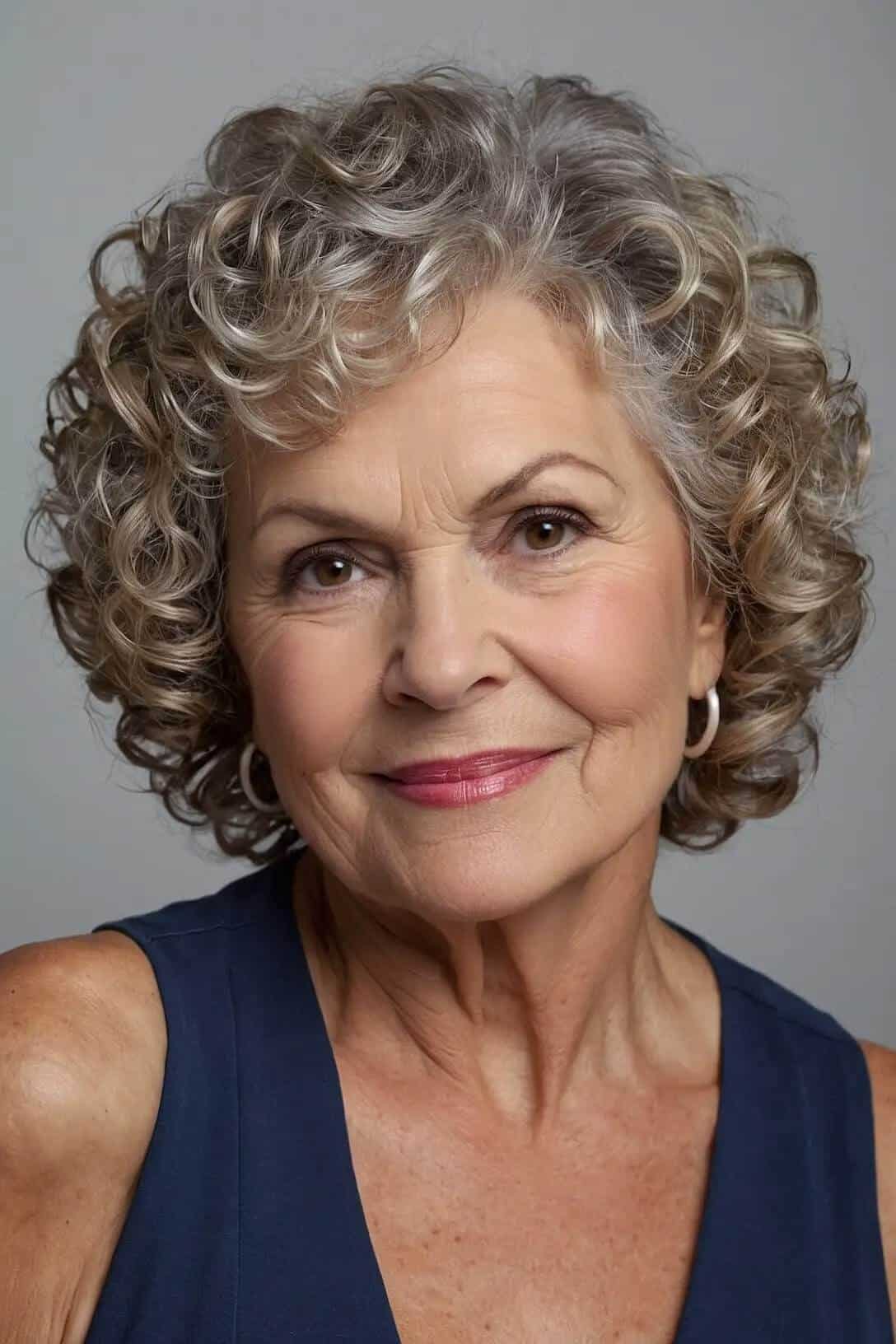
Air-Dry Methods That Add Lift
Short curly hair air-dries much faster than long hair, but technique still determines whether you get shaped curls or a shapeless poof. The micro-plopping method works particularly well for short cuts: after applying products, use a microfiber towel or t-shirt to scrunch upward toward your scalp in sections, holding for a few seconds to encourage curl formation and remove excess water. This is gentler than scrunching with hands and removes enough water that air-drying becomes practical.
While air-drying, resist the urge to touch, fluff, or check your curls. Every disruption before your hair is completely dry creates frizz. If you have time, occasional root clips can help. Section your hair in 4-6 areas, lift the roots away from your scalp, and secure with a small clip while drying. Remove clips when hair is 90% dry. This creates lift without the crunch that heavy gels can leave.
For overnight air-drying, try the modified pineapple: gather hair very loosely on top of your head with a scrunchie, making sure you’re not pulling or flattening any section. The loose gathering keeps curls from getting crushed while you sleep but doesn’t create tension. In the morning, remove the scrunchie, flip your head upside down, and gently shake at the roots for volume.
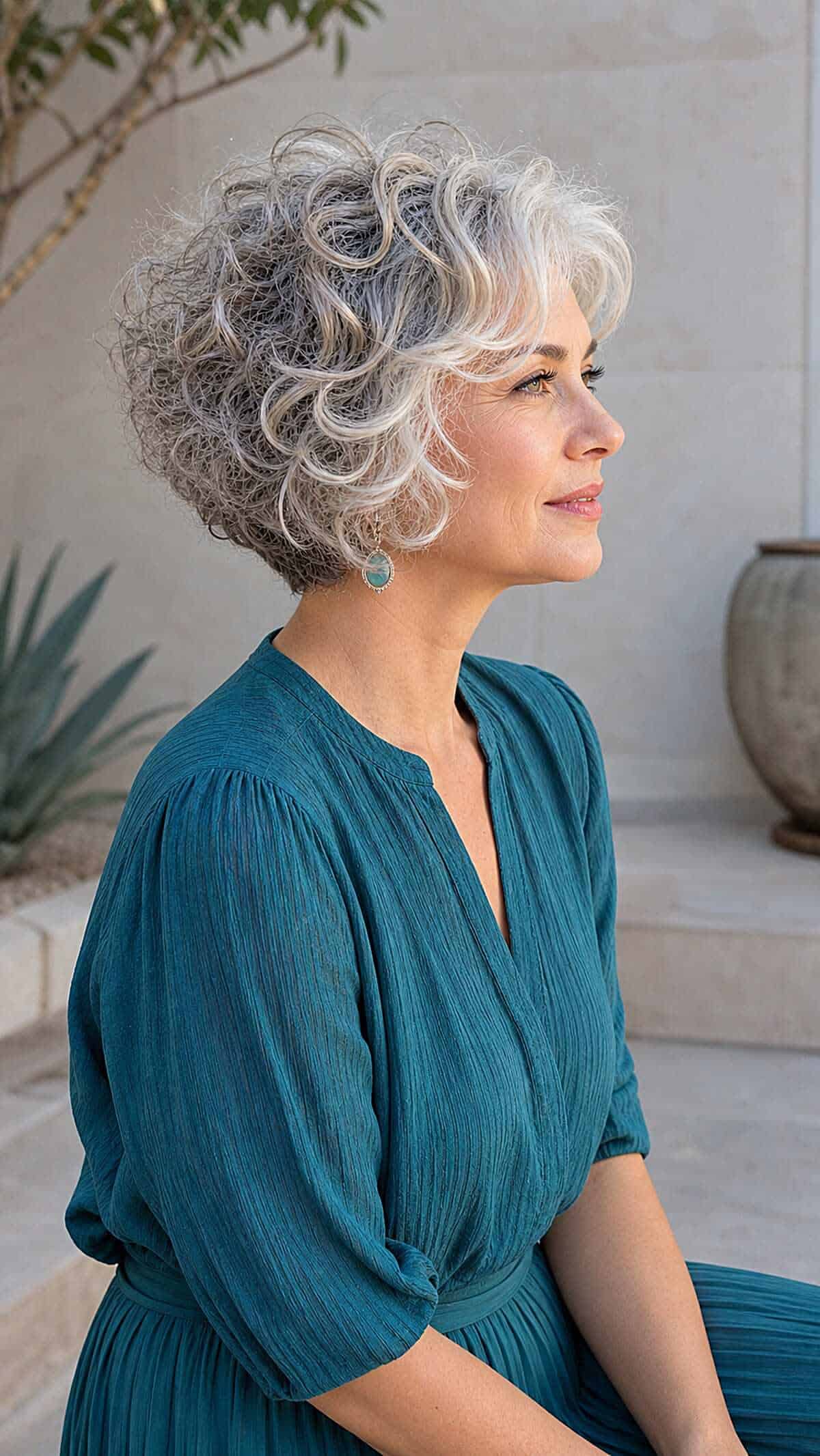
When to Use Diffusing vs. Natural Drying
Diffusing short curly hair takes 10-15 minutes compared to the 30-45 minutes longer hair requires, which makes it a much more practical option if you need styled hair quickly. Use a diffuser when you want maximum volume and definition or when your environment is too humid for clean air-drying.
The technique for short hair differs from long hair diffusing. Rather than “pixie diffusing” (hovering the diffuser around your head), cup sections of your hair into the diffuser bowl and lift toward your scalp, holding for 20-30 seconds before moving to the next section. This lifting motion as you dry is what creates volume at the roots.
Keep heat on medium or low. High heat dries faster but also increases frizz and can make aging hair brittle over time. Diffuse to about 80% dry, then let the last 20% finish naturally. This prevents overdrying while still giving you a styled look in minimal time.
Air-drying makes more sense on non-humid days when you’re not in a rush. It’s also better if you’ve noticed your hair feeling dry or crunchy after diffusing, signs that heat styling is causing moisture loss. Some women alternate: diffuse when needed for volume and speed, air-dry the rest of the time to maintain hair health.
Best Products for Short Curls Over 50
Lightweight Protein-Rich Formulas
Aging hair loses some of its natural protein structure, which is why products with hydrolyzed proteins (wheat, silk, or keratin) make such a visible difference after 50. These proteins temporarily bind to the hair shaft, filling in gaps in the cuticle and creating a smoother, stronger surface. You’ll see improved elasticity and less breakage, both crucial for maintaining short cuts that need shape.
Look for leave-in conditioners or styling creams listing hydrolyzed proteins in the first five ingredients. Apply these to soaking wet hair so the proteins can properly absorb. If you have low porosity hair, which becomes more common with age, you may need to apply protein treatments under a warm towel or processing cap to help products penetrate the tightened cuticle.
Balance is important: too much protein without enough moisture creates dry, stiff hair. If your hair feels crunchy or straw-like after using protein products, alternate with a moisture-focused deep conditioning treatment every other wash. Most women over 50 find a protein-moisture balance of about 60% protein to 40% moisture works best, the opposite ratio of what might have worked in younger years.
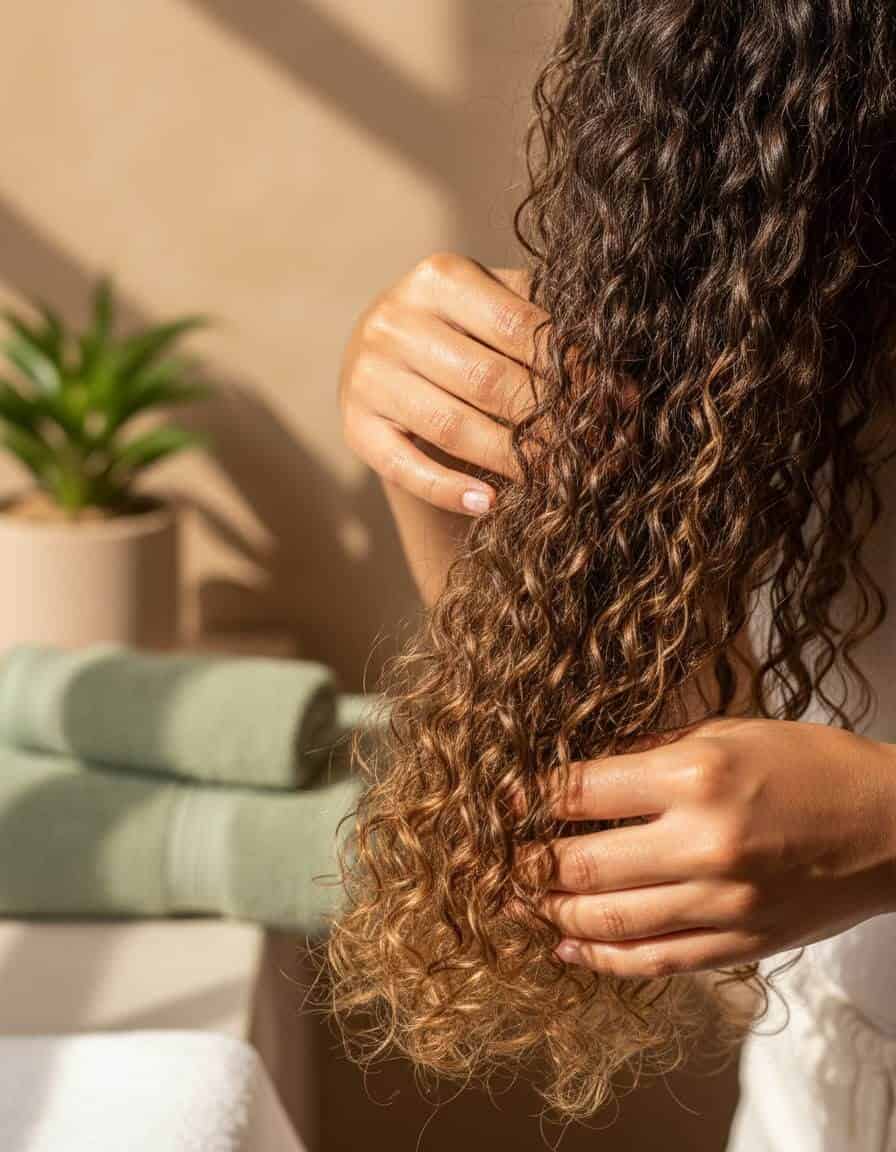
Volumizing Mousses vs. Gels
For thinning hair at any length, mousse typically outperforms gel for root volume. Mousse has an aerated structure that adds volume as it sets without weighing hair down. Apply it first, right at the roots on soaking wet hair, using more than you think you need. A golf-ball-sized amount isn’t excessive for short hair if volume is your goal.
That said, gel still has a place in your routine for definition and hold through the lengths and ends. Modern curl gels have evolved far beyond the crunchy, helmet-like results of old formulas. Look for gels with “soft hold” or “flexible hold” on the label, often achieved with ingredients like flax seed or aloe rather than harsh polymers. These provide structure without stiffness.
The winning combination for many women over 50: volumizing mousse at roots, lightweight gel on lengths, nothing at all on the very ends (which can look stringy with too much product on short cuts). This targeted application gives you volume where you need it and definition where you want it without overall heaviness.
Moisture Balance for Gray Curls
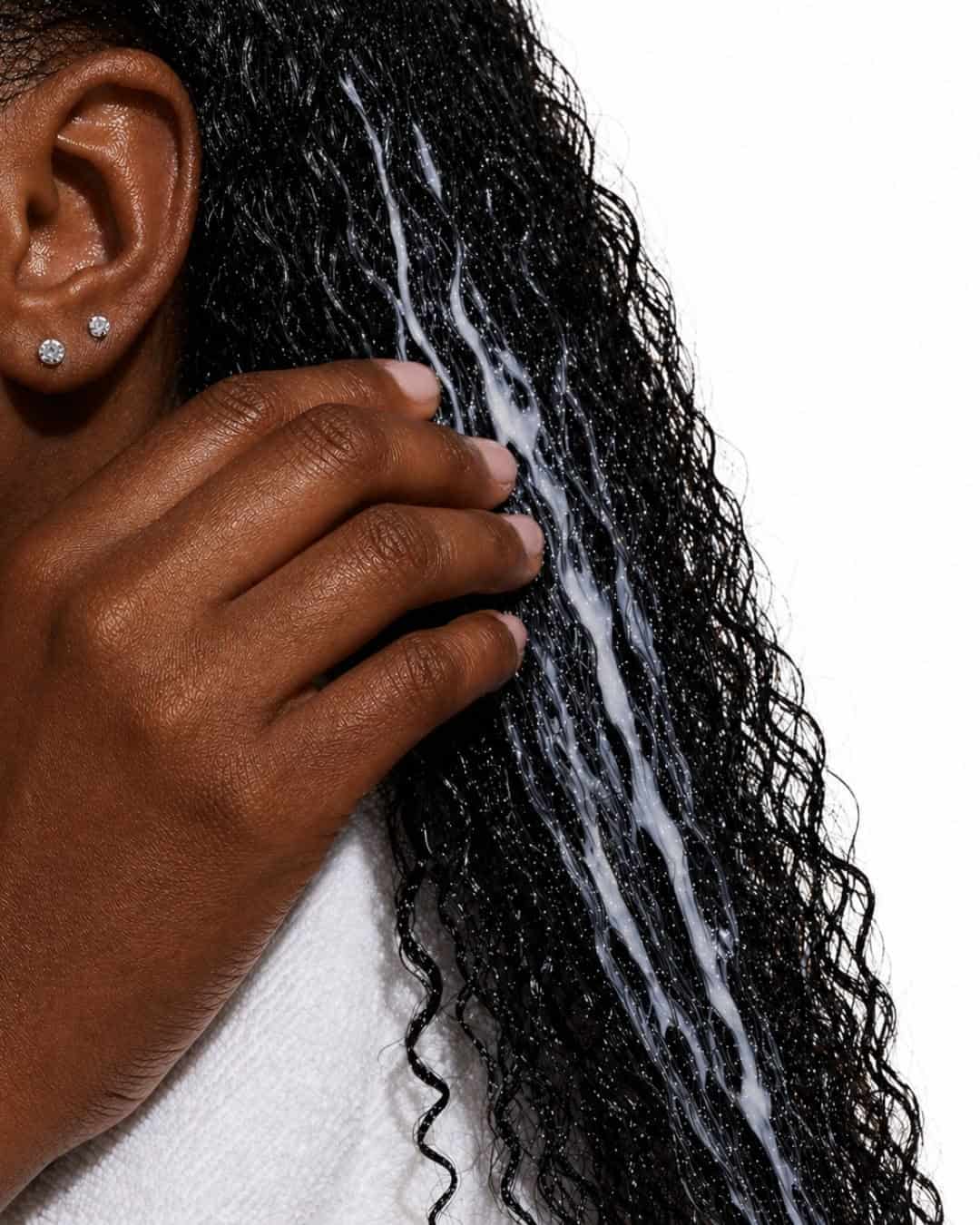
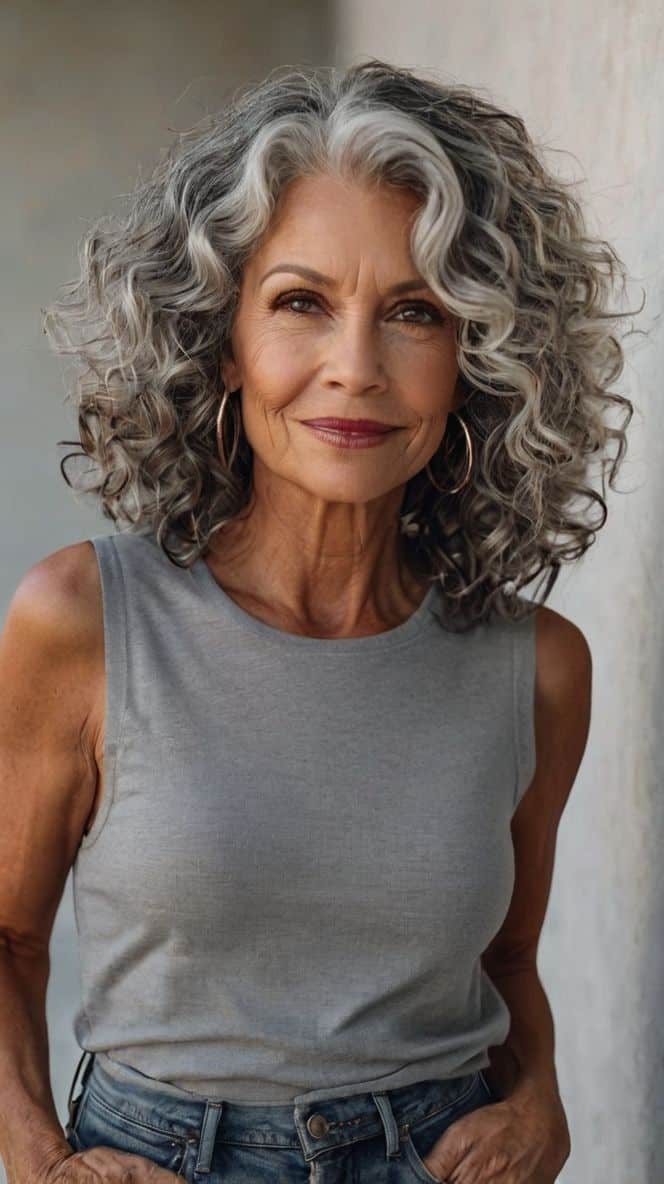
Gray curls are thirstier than pigmented curls, period. They need heavier moisturizers than you probably used before going gray. The challenge is finding products that provide serious hydration without creating greasiness or limp curls, especially on short styles where any heaviness is immediately visible.
Water-based moisturizers with humectants (glycerin, honey, aloe) work better than oil-based products for maintaining volume on gray curls. These ingredients pull moisture from the air into your hair rather than sitting on top as a coating. In very dry climates, you may need to add a few drops of lightweight oil (argan or jojoba) to seal that moisture in, but start with just 2-3 drops for short hair.
Deep conditioning becomes non-negotiable after 50, especially if you’re fully gray. Once weekly is minimum; twice weekly isn’t excessive if your hair is very dry. Apply a moisture-rich deep conditioner to clean, damp hair, cover with a processing cap, and leave for 20-30 minutes. The temporary inconvenience pays dividends in curl definition, softness, and overall manageability.
Maintenance and Cut Frequency
How Often to Trim Short Curly Styles
Short curly hair needs more frequent cuts than long hair, simply because a quarter-inch of growth is more noticeable when your overall length is only 2-4 inches. Plan on cuts every 4-6 weeks if you want to maintain a precise shape like a pixie or tapered crop. Curly bobs can stretch to 6-8 weeks between cuts if you’re comfortable with a slightly grown-out look.
The good news: short cuts are faster and usually less expensive than long-hair appointments. Many women find that the cost and time of more frequent cuts is offset by spending dramatically less time and money on daily styling products and routines. The math works in your favor over time.
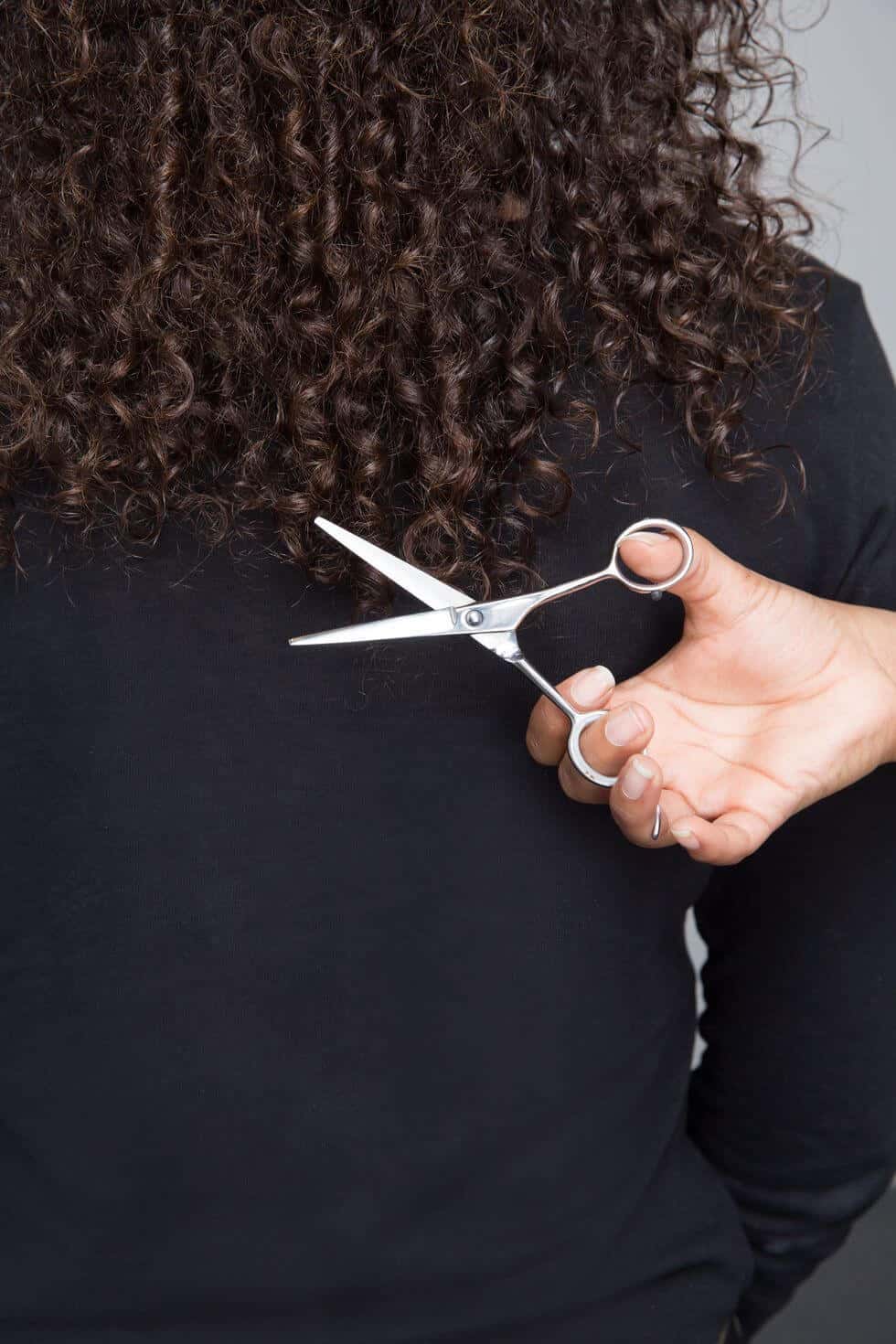
Between professional cuts, you can maintain shape by trimming any obvious straggly pieces yourself with hair shears (never regular scissors, which damage the hair shaft). Focus only on pieces that stick out noticeably or have split ends, and trim them while dry so you can see exactly what you’re cutting. Don’t attempt to reshape your entire cut; that’s what you’re paying a professional to do.
Communicating With Your Stylist About Texture Changes
If you’ve been seeing the same stylist for years, they’ve likely noticed your texture changes, but explicit communication helps them adjust techniques. Point out specific areas where your curl pattern has loosened or where you’re experiencing the most thinning. Ask them to modify their cutting approach for your current texture rather than continuing to cut your hair as they did five or ten years ago.
Be specific about your styling routine and how much time you’re willing to spend. A cut that requires 30 minutes of diffusing and product layering might be beautiful in the salon but frustrating at home if you want something faster. Most stylists appreciate this honesty; it helps them create a cut that works with your real life rather than an idealized version.
If your stylist isn’t adapting to your changing texture or seems dismissive of your concerns about thinning or gray hair, it may be time to find a specialist in mature curly hair. These stylists exist in most cities and understand the specific challenges of aging texture. The Ouidad and Deva-trained stylist networks include many who specialize in this demographic.
At-Home Shape Maintenance Between Appointments
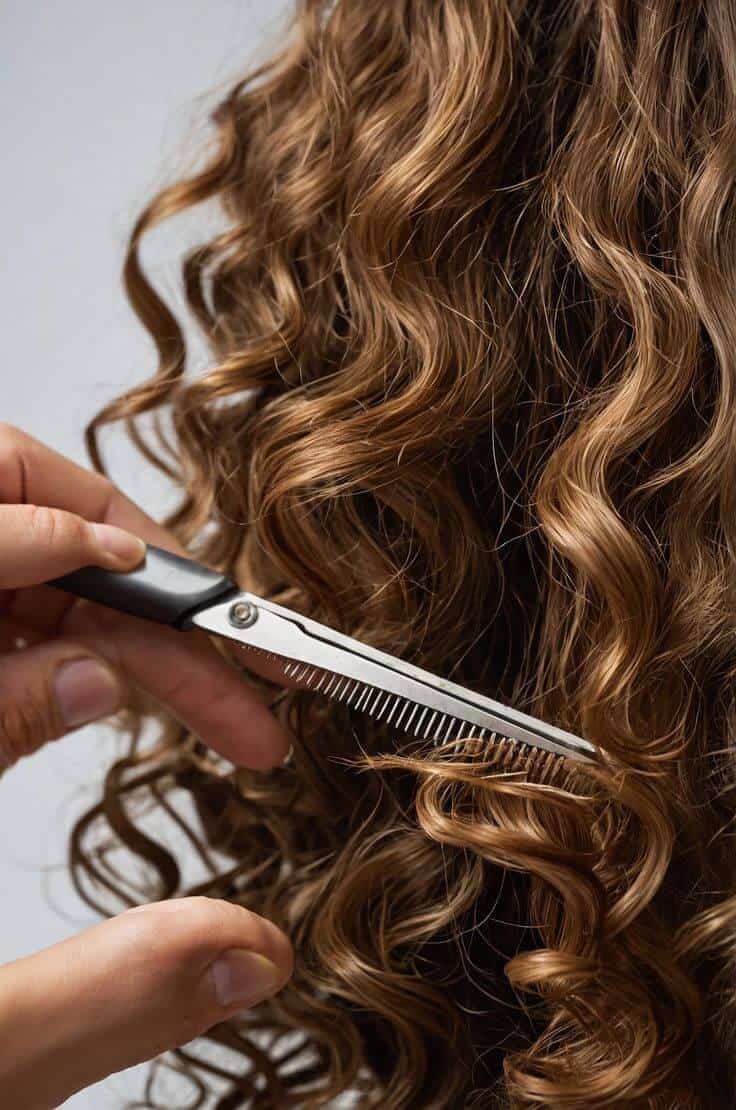
Short curly cuts can lose their shape as they grow, but simple at-home maintenance keeps you looking polished between professional cuts. Invest in a small pair of professional hair shears (under $30) designed for texture cutting. These have a slightly serrated edge that prevents hair from sliding during cutting and creates softer, less blunt ends.
The safest areas to trim yourself are face-framing pieces and any individual curls that seem to stick out awkwardly from your overall shape. Always cut on dry hair so you can see the curl’s natural position, and cut into the curl at an angle rather than straight across. This point-cutting technique prevents blunt lines and helps trimmed pieces blend back into your overall style.
For the back and sides of pixies or tapered crops, resist the urge to trim these yourself. These areas are difficult to see and easy to over-cut, creating unintentional asymmetry. If your nape area is growing out uncomfortably between appointments, ask your stylist if they offer quick “clean-up” trims for just the perimeter at a reduced cost. Many salons do this for regular clients.
Frequently Asked Questions
Will cutting my hair short make me look older?
Short hair doesn’t age you; the wrong short haircut for your face shape and texture ages you. A well-cut short curly style with movement and texture around your face typically looks more modern and youthful than struggling with long, thin hair that lacks volume. The key is avoiding styles that are too severe or pulled back too tightly, both of which can create harsh lines. Face-framing layers and textured cuts create softness that flatters mature faces.
Can I still do a short curly cut if my hair is thinning significantly?
Absolutely, and you’ll likely see better results than trying to maintain length. Short cuts with strategic layering create the illusion of density by removing weight that pulls hair flat. Work with a stylist experienced in cutting thinning curly hair who can add layers in fuller areas while keeping thinner sections slightly longer to balance overall density. Volumizing products become more effective on short hair because you’re working with less surface area.
How do I prevent my short curls from looking too poofy or triangular?
Triangle shape happens when there’s too much bulk at the sides without enough length to weigh it down. The solution is internal layering that removes bulk from the sides while maintaining enough length through the crown for volume. Ask your stylist for a “stacked” or “graduated” shape that’s fuller at the crown and closer to the head at the sides and nape. Using gel rather than cream for styling also helps control expansion without losing curl definition.
What if I don’t like my short curly cut after I get it?
Give yourself at least two weeks to adjust and learn how to style it before panicking. Most women need time to develop new styling techniques for short hair and to see how their curls behave at this length through different weather conditions. If you’re still unhappy after genuinely trying, hair grows about half an inch per month, so you can transition back to a longer style gradually. In the meantime, accessories like headbands, clips, or small scarves can help you feel more comfortable while you adjust or grow out.
Should I go gray with a short curly cut or keep coloring?
This is entirely personal preference, not a hair-health requirement. That said, short cuts make the transition to gray much easier if you’re considering it because you’re cutting off colored hair more quickly and have less contrast between your roots and ends. Many women find that going gray with a fresh short cut feels like a complete, intentional transformation rather than “letting themselves go.” If you love your color, continue it; maintenance is actually easier on short hair because you have less length to cover.
Conclusion
Short curly hair after 50 isn’t a compromise or a concession to age; it’s a strategic choice that works with your hair’s current reality rather than fighting it. The volume, shape, and definition you gain from the right short cut can give you back the confidence that might have diminished as your long hair thinned or lost its pattern. These styles require investment in regular cuts and appropriate products, but they return that investment through dramatically reduced daily styling time and genuinely healthier hair.
Your next step is simple: book a consultation with a curly-hair specialist (not just any stylist who says they “can do curly hair”) and bring photos of short curly hairstyles for women over 50 that appeal to you. Be honest about how much time you want to spend styling, which face features you want to emphasize, and any specific concerns about thinning or texture changes. A skilled stylist will translate those preferences into a cut that fits your life, your curls, and the woman you are right now.